On 8th May 2025, 80 years after the end of World War II, the second Ukrainian and Kazakh memorial was unveiled by Ukrainian First Secretary Nataliya Marikutsa from the Ukrainian Embassy and Ambassador Adil Tursunov from the Kazakh Embassy. It took place in Borge in Lofoten. During the war, 105 Soviet soldiers were in prison camps at Ostad, of which approximately 60% were from Ukraine.
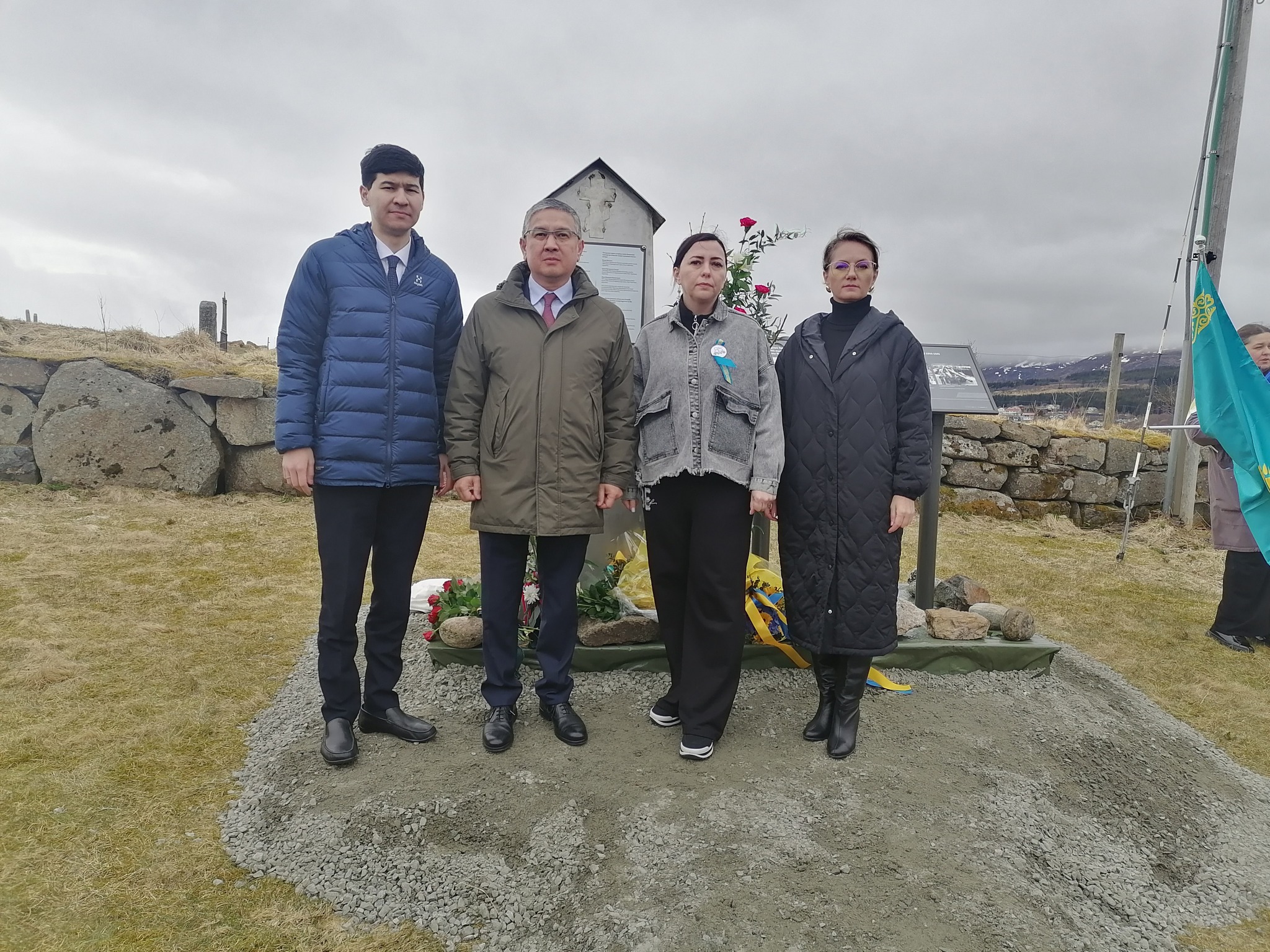
From right, First Secretary at the Ukrainian Embassy Nataliya Marikutsa, Larisa Kushnaryova (relative from Kazakhstan), Ambassador at the Kazakh Embassy Adil Tursunov, and Tanat Suldabayev, Attache at the Kazakh Embassy.
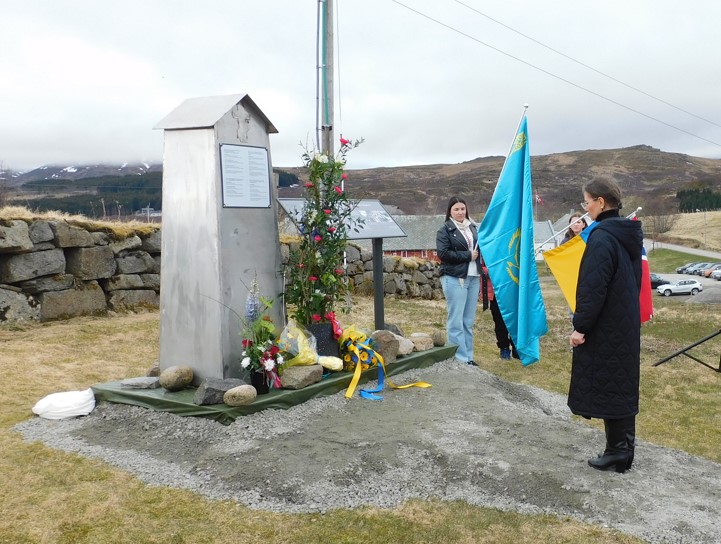
First Secretary Nataliya Marikutsa of the Ukrainian Embassy pays tribute to the fallen soldiers.
It was at the 2022 Borgekonferansen in August, at the initiative of Per-Kaare Holdal and Frode Wigum, that work began to obtain facts and erect a memorial monument at the place where the soldiers were shot and near where the camp was at Ostad. In the
This work established a good and necessary collaboration with Vestvågøy Municipality and Mayor Jonny Finstad. This is the second Ukrainian memorial that has been erected in Norway, even though Ukrainian soldiers made a heroic effort in the liberation of Norway, and many sacrificed their lives.
The prisoner soldiers came from Eastern Finnmark in Norway in the autumn of 1944 when the Nazis had to retreat. The prisoner list shows that 62% of the soldiers in the Ostad camp came from Ukraine.
- This anniversary is not just a date. This is a reminder of how fragile peace is and how dangerous it is when hatred, violence, and totalitarianism resurface. And today, Ukraine is once again being defended against aggression. Russia brought war, terror, and destruction to our country, said First Secretary Nataliya Marikutsa from the Ukrainian Embassy in her memorial speech.
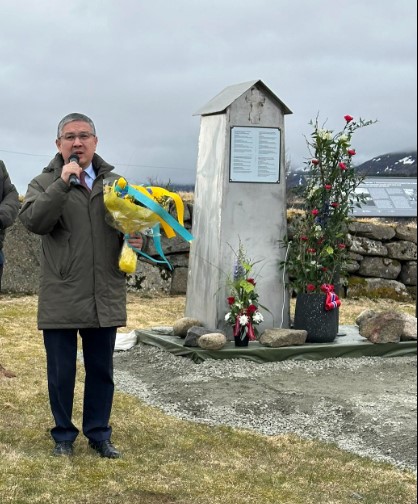
Adil Tursunov, ambassador at the Kazakh embassy, laid flowers at the memorial.
Michael Stokke from the Narvik Center has worked on facts about the Ostad camp, and a book about facts from the Ostad camp and other camps on Vestvågøy has now been published, "Prison and suffering".
In the camp at Ostad, 3 soldiers were shot, one from Kazakhstan and two from Ukraine. This was in the last months of World War II. Two of them were buried in the cemetery at Borge church, and one in the cemetery at Voll. On the first Sunday after the liberation, a lot of people gathered in Borge church, including many of the former Soviet prisoners. The three who were shot were 2 from Ukraine and 1 from Kazakhstan. The three soldiers who were shot were:
- Fyodor Mukovoz, born in 1915, in Kharkiv, Ukraine. Shot and killed on January 18, 1945, and buried at Voll Cemetery
- Anton Grigorievich Ratsjok, born in 1920, in Vinnytsia, Ukraine. Shot and killed on March 22, 1945, and buried at Borg Cemetery
- Ivan Ivanovich Povoroznjuk, born in 1921 in Kostanaj, Kazakhstan. Shot and killed on March 22, 1945, and buried at Borg Cemetery
The memorial is for these three soldiers and was erected 80 years after the incident.
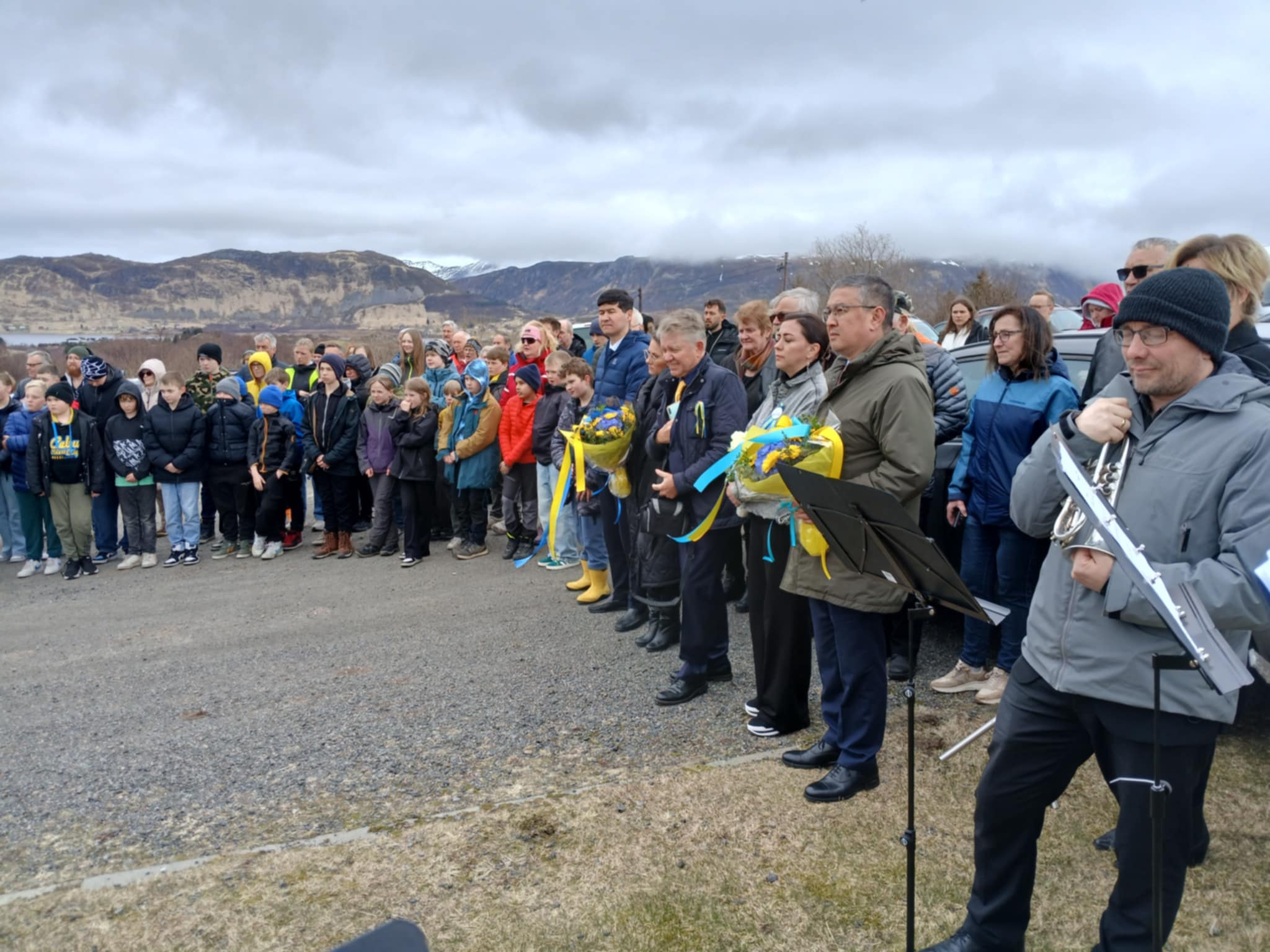
Many attended the unveiling of the memorial monument on May 8, 2025. Photo: Trond Handberg
The location of the prison camps at Ostad was at the west end of Skjerpvatnet which housed the soldiers in "plywood" tents. The exact number has now been confirmed and the prisoner lists have been presented by researcher Stokke.
The commander in chief who was responsible for the guard and all of them were not of the most humane type, and his name was Haupmann Engelhart. Haupmann Engelhart had a sergeant named Reinholdt. He was not of the good type either. The result was that one or two of the soldiers were then shot. Shortly before the liberation, a third prisoner, Fjodor Mukovoz, was shot in the camp. Eyewitnesses say that there was a possibility of a riot in the camp because of the poor food. The riot was put down and a random person was shot, but the other prisoners had to stand in line and watch the whole thing.
Ambassador Adil Tursunov at the Kazakh Embassy stated the following:
- The memorial on Vestvågøy has once again marked one of the historical pages in friendly relations between Kazakhstan and Norway.
The original memorial, which was made in 1945 by the comrades of two of the prisoners, was made of old boards and painted red on the "roof".
Ivan's family has never found out what happened to him until Per-Kaare Holdal got a large article in a central Kazakh newspaper, after good cooperation with the Kazakh Embassy. Then Holdal received an email from Larisa. She was the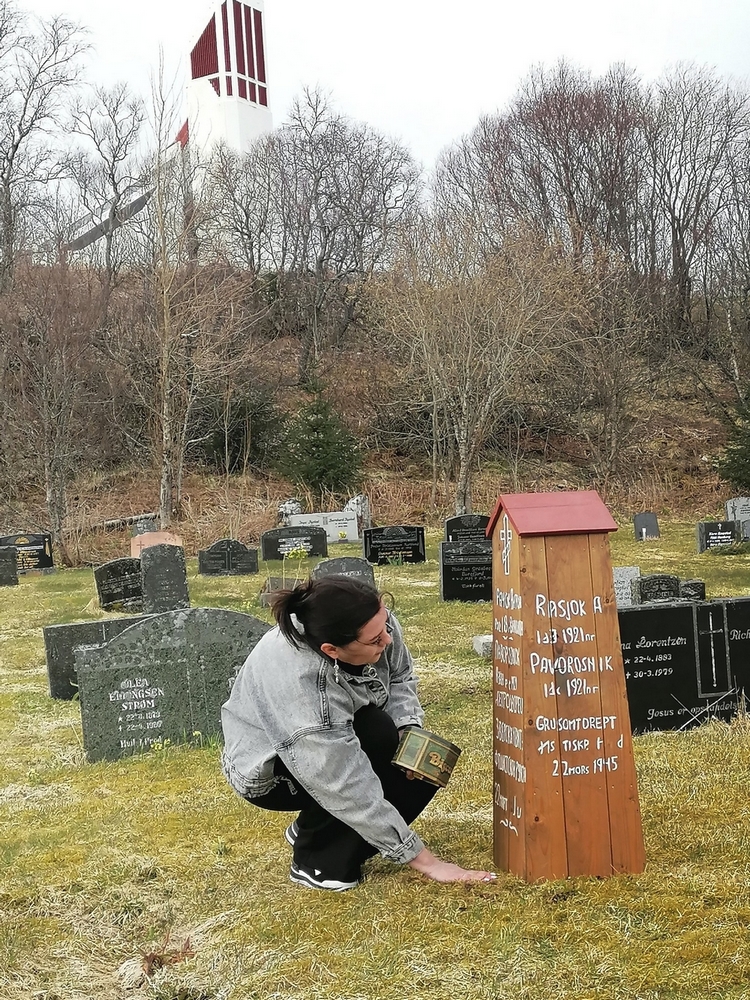 daughter of the niece of Ivan Ivanovich Povoroznjuk. They had never found out about Ivan's final fate. He was registered as missing until contact was established. And in cooperation with the embassy, Larisa was of course, invited to the ceremony. This was a very moving experience for both Larisa and the rest of us.
Right: Larisa at the place where her great-uncle was first buried and the original memorial has been temporarily erected again. Larisa was able to bring some soil back to Kazakhstan for the grave where Ivan's mother and brother were buried. It was another touching moment for Larisa who had come all the way from the province in Kazakhstan.
During "Operation Asphalt" in 1951, the three soldiers were transferred to the joint memorial site at Tjøtte in Helgeland.
We would like to express our heartfelt and solemn thanks to the Ukrainian Embassy, First Secretary Nataliya Marikutsa, and the Kazakh Ambassador Adil Tursunov, Mayor Jonny Finstad and of course, Larisa, for their presence at and the execution of the unveiling of the memorial at Borge Church. Their participation gave the ceremony a dignified and international setting and helped to honor the memory of the three fallen soldiers from World War II. Their presence symbolized solidarity and respect across time and borders.
We sincerely thank them for sharing this important moment with us.
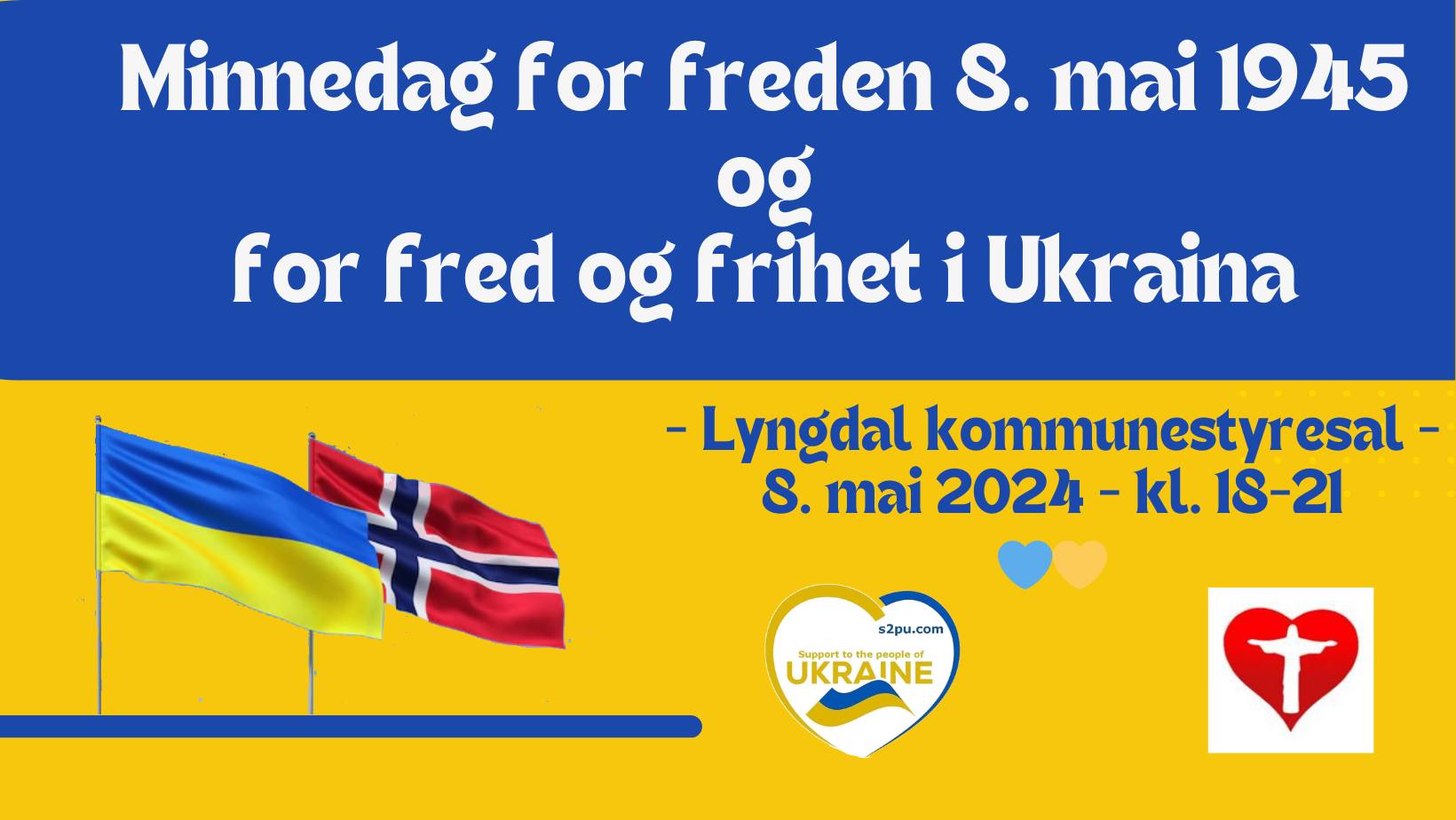
The first Ukrainian memorial to be unveiled in Lyngdal in 2022.
 Friday's display of disrespect and decency from an American president and vice president was a disgrace to the world